×

The Standard e-Paper
Home To Bold Columnists





Audio By Vocalize
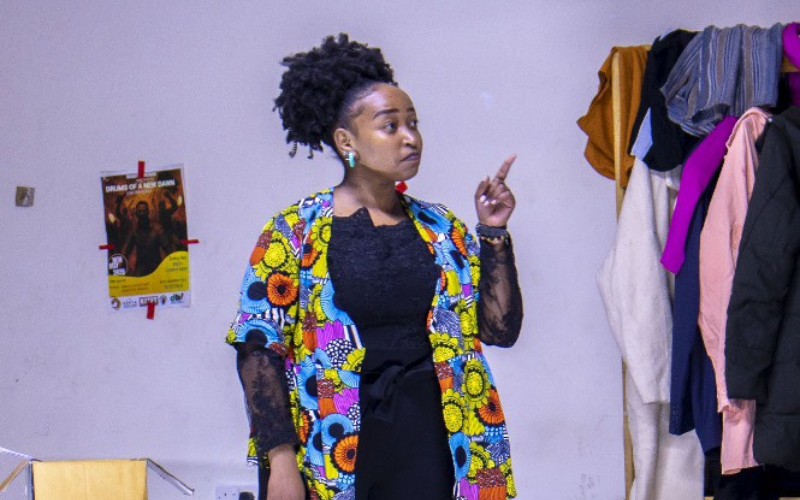
A young Njeri (Sylvia Wanja) has been living in Nairobi until the tragic bombing of the US Embassy in the city. Her father, who works at the Ufundi House nearby, loses his job when the building is razed down by the bomb. The family moves to Molo town.
This sets the tone for Exhale, a one-woman play by A Bunch of Idiots. Written by Ngugi Martin and Sylvia Wanja, it is going on stage on June 19 at the Baraza Media Lab in Nakuru.
The play is a semi-fictional story that traces political and national events from the 1998 US Embassy bombing, the Moi regime, and the 2007 to 2008 post-election violence to a few months before the 2027 general elections.
After settling in Molo town, another unfortunate event strikes; their house is destroyed to ashes and her father is killed during the 2007-2008 post-election violence since they come from a different community.
The family is forced to relocate to their rural home. With her mother developing mental health issues, Njeri has to look after her younger sister Shiku at a young age while she finds unhealthy coping mechanisms through alcohol and smoking. The play then progresses to 2026, just a year before the 2027 elections.
Wanja explains that the play takes a look at the past and present through flashbacks and flash-forwards to see what has changed and implores people to make better political choices.
“As an adult, my character looks back and gains a better understanding of the events. She believes that things need to change so that there is no repeat of 2027 in the 2027 election,” she says.
Ngugi Martin, a human rights activist and civic educator, says that he wanted to remind people what happened in previous elections and to prevent it from happening again. By portraying how the post-election violence affected Njeri, he wants to elicit emotions that would make people rethink their political choices.
Moreover, he observes that while tribal wars have ended, division still exists in every election.
“In 2022, we had 'dynasty' against 'hustlers', and now we have 'one-term' against 'two-term' slogans. Now the division is whether the president deserves a reelection or not,” he says.
He intends to change the conversation from a one-term to a new term for people to know the path the country should take. The play also incorporates patriotic folk songs and civic awareness.
Ngugi chose a one-woman play since the genre has never been explored in the Nakuru theatre scene. And since the story is personal to Wanja, they thought to narrow it down to one character. In her scripting, she developed the character’s personal life for resonance while Ngugi focused on the real political stories.
The play also shows how the media drives political agendas and faults it for giving limelight to powerful candidates and sidelining those who might make better candidates but lack the political bravado. The play also tackles economy, education, healthcare, and tribalism.
“The play questions media involvement in misleading citizens during elections and the ability of Kenyans to make informed decisions when choosing leaders,” he says.
After the play, an interactive discussion with the audience will follow to discuss civic duties so as to prevent a repeat of the post-election violence.
Subscribe to our newsletter and stay updated on the latest developments and special offers!